Lal Ded (Lalleshwari): The Life and Sayings of Kashmir’s First Poet
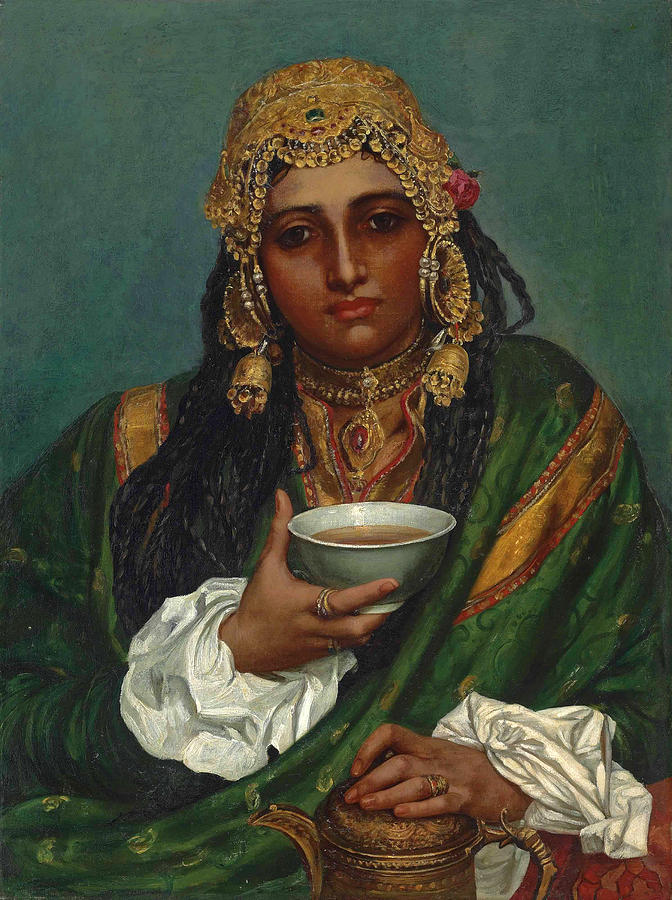
Six and a half centuries after her death, Kashmiris still quote her. A grandmother scolding a child, a preacher in a mosque, a scholar of Shaiva philosophy and a singer at a wedding may all reach for the same few lines of verse. They belong to Lal Ded, the fourteenth-century mystic whom Hindus call Lalleshwari and Muslims call Lalla Arifa, and whose sayings are the oldest poetry in the Kashmiri language. “There is not a Kashmiri, Hindu or Musalman,” wrote Sir George Grierson in 1920, “who has not some of these ready on the tip of his tongue, and who does not reverence her memory.”
Who was Lal Ded?
Almost everything we know about her life comes from tradition rather than records. Grierson, who edited her sayings, was frank about it: “Numerous stories are current about Lalla in the Valley, but none of them is deserving of literal credence … All that we can affirm with some assurance is that she certainly existed, and that she probably lived in the fourteenth century of our era, being a contemporary of Sayyid Ali Hamadani at the time of his visit to Kashmir.”
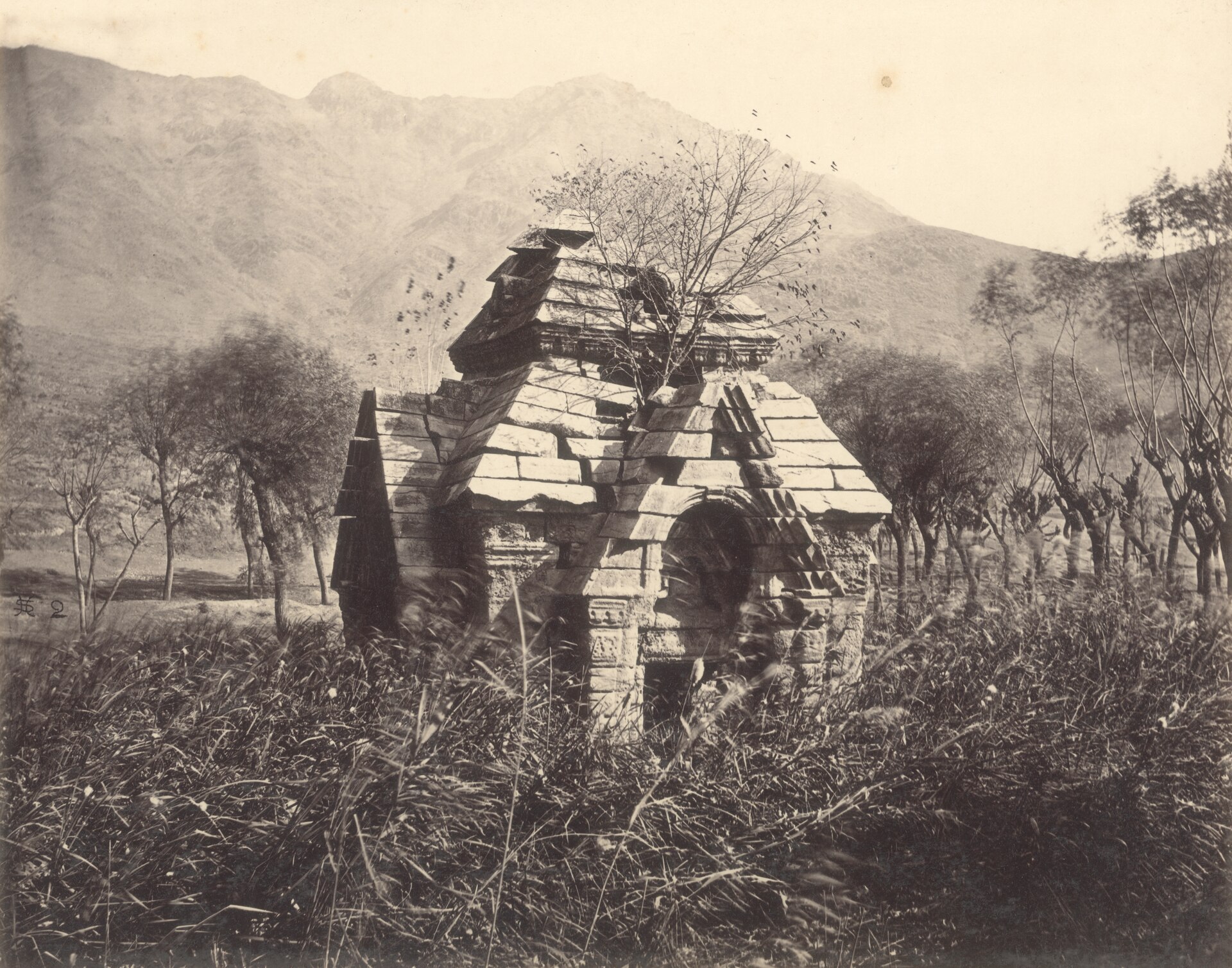
Pandit Anand Koul, who collected the traditions about her in 1921, placed her birth around the middle of the fourteenth century, in the reign of Sultan Ala-ud-Din, at Pandrethan, the old capital (Puranadhishthana) four miles south-east of Srinagar. Most accounts place her death towards the end of the century. The name Lal Ded simply means “Granny Lal”, the affectionate way Kashmiris have spoken of her for generations.
The bride of Pampore
She was born into a Kashmiri Pandit family and, as was the custom, married young. Koul records that at twelve she was married into a family named Nicha Bat at Pampore, and that her father-in-law gave her the name Padmavati. The stories about her married life are among the best known in Kashmir. Her stepmother-in-law treated her harshly, and at meals would put a stone on her plate, covered with a thin layer of rice, “so that it might appear to those who chanced to see it that a brimful plate of food was given to the daughter-in-law”. Lalla bore it without complaint for twelve years.
The secret came out one day when a sheep was slaughtered for a family ceremony and a neighbour, meeting her at the river, teased her about the feast she would enjoy that evening. Lalla answered with a line that has been a Kashmiri proverb ever since. In Grierson’s rendering: “Whether they killed a big sheep or a small one, it was all the same; Lal had always a stone for her dinner.” Her father-in-law, overhearing from the other side of the wall, snatched away her plate that evening and found the stone beneath the rice.
Another story tells how her husband, suspicious of her early-morning absences, followed her to the river and found her not at a lover’s meeting but at prayer. As she came home with a pot of water on her head, he struck it with a stick in anger. The pot broke, Koul writes, “but the water was not spilt and remained perfectly still on her head”. She filled every vessel in the house with it, and threw the rest outside, where it formed a pond still known as Lal Trag.
The wandering yogini
At length she left her husband’s home for good and became a disciple of the Shaiva teacher Sidh Srikanth (Sed Boyu), the family priest, from whom she learnt yoga. In Koul’s words, “in course of time she far excelled him in practising it”. She lived thereafter as a wandering ascetic, careless of clothes, comfort and the opinion of others, singing and dancing in ecstasy, and speaking the verses that would make her famous.
Many of the stories told of her are lessons in the folly of outward show. Once, Koul relates, she was seen scrubbing the outside of a dirty earthen pot in the river just upstream from her teacher. When he mocked her, saying the pot could never be cleaned from outside alone, she asked how, then, he could make his body pure by bathing, “so long as the inside of the body was not at the same time purified”. Another time, followed by jeering children, she asked a cloth merchant for a length of cloth cut into two halves of exactly equal weight. All day she tied a knot in the piece on one shoulder whenever someone greeted her respectfully, and in the other whenever someone mocked her. In the evening she had the two pieces weighed again. They balanced exactly. Respect and disrespect, she told him, made no difference to her. Koul gives the verse she spoke, in his own translation:
“Let them jeer or cheer me:
Translated by Anand Koul, The Indian Antiquary, 1921
Let anybody say what he likes:
Let good persons worship me with flowers:
What can any one (of them) gain, I being pure?”
Koul records that she died at an advanced age at Bijbehara, south-east of Srinagar, “just outside the Jama Masjid there, near its south-eastern corner”.
The vakh: four lines that carry a philosophy
Lal Ded’s sayings are called vakh, from the Sanskrit vakya, “speech”. Each is a short verse, usually of four lines, in the Kashmiri of her day: plain words, homely images of the kitchen, the loom, the river and the field, and an argument that turns in the last line. Koul called them “current coins of quotation, a volume being packed in a single saying”. Lalla wrote nothing. Her lines lived in people’s heads, handed on by grandmothers and by professional reciters, and every generation’s Kashmiri rubbed off on them a bit; today’s text is a patchwork of the fourteenth century and much later. A few “Lal Ded” verses are probably by other hands. No two collections quite match. What is not in doubt is their place in the language: Kashmiri literature begins with Lal Ded.
What she taught
Her roots are in Kashmir Shaivism, Trika, which says there is finally only Shiva, pure awareness, and he is in everything. She keeps coming back to the same handful of points. Look inside, not outside. Bathing at tirthas, chanting, reading shastras, none of it helps if the mind is a mess. Get hold of your mind; get hold of your breath. Know yourself properly and you will find there was never any gap between you and God. Grierson described her as “a Yogini … but she was no bigot, and, to her, all religions were at one in their essential elements”.
Her most famous verse tells of her long search and its ending. Grierson’s translation of 1920 runs:
“With passionate longing did I, Lalla, go forth.
Lalla-Vakyani, no. 3, translated by George Grierson and Lionel Barnett (1920)
Seeking and searching did I pass the day and night.
Then, lo, saw I in mine own house a learned man,
And that was my lucky star and my lucky moment when I laid hold of him.”
Another, which she is said to have spoken to her own teacher when he was absorbed in temple worship, is among the boldest of her sayings. Koul translates:
“Idol is of stone, temple is of stone;
Translated by Anand Koul, The Indian Antiquary, 1921
Above (temple) and below (idol) are one;
Which of them wilt thou worship, O foolish Pandit?
Cause thou the union of mind with soul.”
And a third, much loved in Kashmir, speaks to both its faiths at once:
Shiva lives in every place;
Shiv chuy thali thali rozān… (our translation)
do not divide the Hindu from the Muslim.
If you are wise, know your own self:
that is the way to know the Lord.
Lalleshwari and Lalla Arifa
Lal Ded lived through one of the great turning points in Kashmir’s history, when Islam was spreading through the valley through the preaching of Sufis. Her verses, with their indifference to caste, creed and ritual, spoke to both communities, and both have claimed her ever since. To Kashmiri Pandits she is Lalleshwari, a yogini of the Shaiva tradition; the later mystic Rupa Bhawani, Koul notes, honoured her as her “grand preceptress”. To Kashmiri Muslims she is Lalla Arifa, “Lalla the knower of God”, a saint in the line of the Sufis.
Legend links her with the two great Muslim figures of her age. One story says that she nursed the infant Sheikh Nooruddin, who would not take his mother’s milk. Koul gives her words to the baby: “Thou wert not ashamed of coming, why then art thou ashamed of sucking?” Another tells how, seeing Mir Sayyid Ali Hamadani in the distance, she cried “I have seen a man!”, fled into a baker’s blazing oven, and stepped out again, in Grierson’s version, “clad in the green garments of Paradise”.
The Persian lives of Nooruddin preserve verse exchanges between the saints. In one, recorded by Koul, Nooruddin’s disciple Baba Nasr-ud-Din, Nooruddin himself and Lal Ded each complete the same four lines. The disciple speaks of worldly goods:
“There is no light like that of the sun;
There is no pilgrimage like Ganga;
There is no relation like a brother;
There is no ease like that of a wife.”
Nooruddin answers with the hermit’s view: no light like that of the eyes, no pilgrimage like that of the knees, no relation like one’s own pocket, no ease like that of the cloak. Lal Ded has the last word:
“There is no light like that of the knowledge of God;
Translated by Anand Koul, The Indian Antiquary, 1921
There is no pilgrimage like that of the search of God;
There is no relation compared to the Deity;
There is no ease like that got from the fear of God.”
Did any of this happen? Nobody can say. But notice who tells these stories: Pandits and Muslims alike. She has never belonged to just one side.
How her sayings survived
The earliest written accounts of Lal Ded appear in Persian lives of Kashmiri saints, about two centuries after her death. Koul records that around 1720 Pandit Bhaskara Razdan collected sixty of her sayings and translated them into Sanskrit verse, and that in the nineteenth century Pandit Lakshman Kak gathered 109, with a Sanskrit commentary.
The most important early edition in English came about in a remarkable way. In 1914 Sir George Grierson, the great scholar of Indian languages, asked his friend Pandit Mukunda Rama Shastri to find him a good manuscript of the Lalla-vakyani. None could be found. Instead the Pandit came across “a very old Brahman named Dharma-dasa Darwesh of the village of Gush”, near Sharada, who made it his business to recite Lalla’s songs “as he had received them by family tradition”. The Pandit wrote them down from his dictation. Grierson trusted such oral transmission: “Such fleshy tables of the heart are often more trustworthy than birch-bark or paper manuscripts. The reciters, even when learned Pandits, take every care to deliver the messages word for word as they have received them, whether they understand them or not.” The result, edited with Lionel Barnett, was published in 1920 as Lalla-Vakyani, or The Wise Sayings of Lal Ded.
In 1921 Anand Koul published his Life Sketch of Laleshwari in The Indian Antiquary, retelling the traditions about her life. Sir Richard Temple’s The Word of Lalla (1924) followed, and in the later twentieth century the Kashmiri scholar Jayalal Kaul and the poet Ranjit Hoskote produced studies and translations that are still widely read.
Read her in the Library
- Lalla-Vakyani (Grierson and Barnett, 1920). Kashmiri and English face to face, with notes and a word list.
- Life Sketch of Laleshwari, Pandit Anand Koul, 1921: her life as remembered in Kashmir, with her sayings.
- For the world she lived in, see Walter Lawrence’s The Valley of Kashmir and J. Hinton Knowles’ Folk-Tales of Kashmir.
Sources and further reading
- Sir George Grierson and Lionel D. Barnett, Lalla-Vakyani, or The Wise Sayings of Lal Ded, a Mystic Poetess of Ancient Kashmir, Royal Asiatic Society, London, 1920.
- Pandit Anand Koul, “Life Sketch of Laleshwari, a Great Hermitess of Kashmir”, The Indian Antiquary, November and December 1921.
- Sir Richard Carnac Temple, The Word of Lalla the Prophetess, Cambridge University Press, 1924.
- Jayalal Kaul, Lal Ded, Sahitya Akademi, New Delhi, 1973.
- Ranjit Hoskote, I, Lalla: The Poems of Lal Děd, Penguin Classics, New Delhi, 2011.
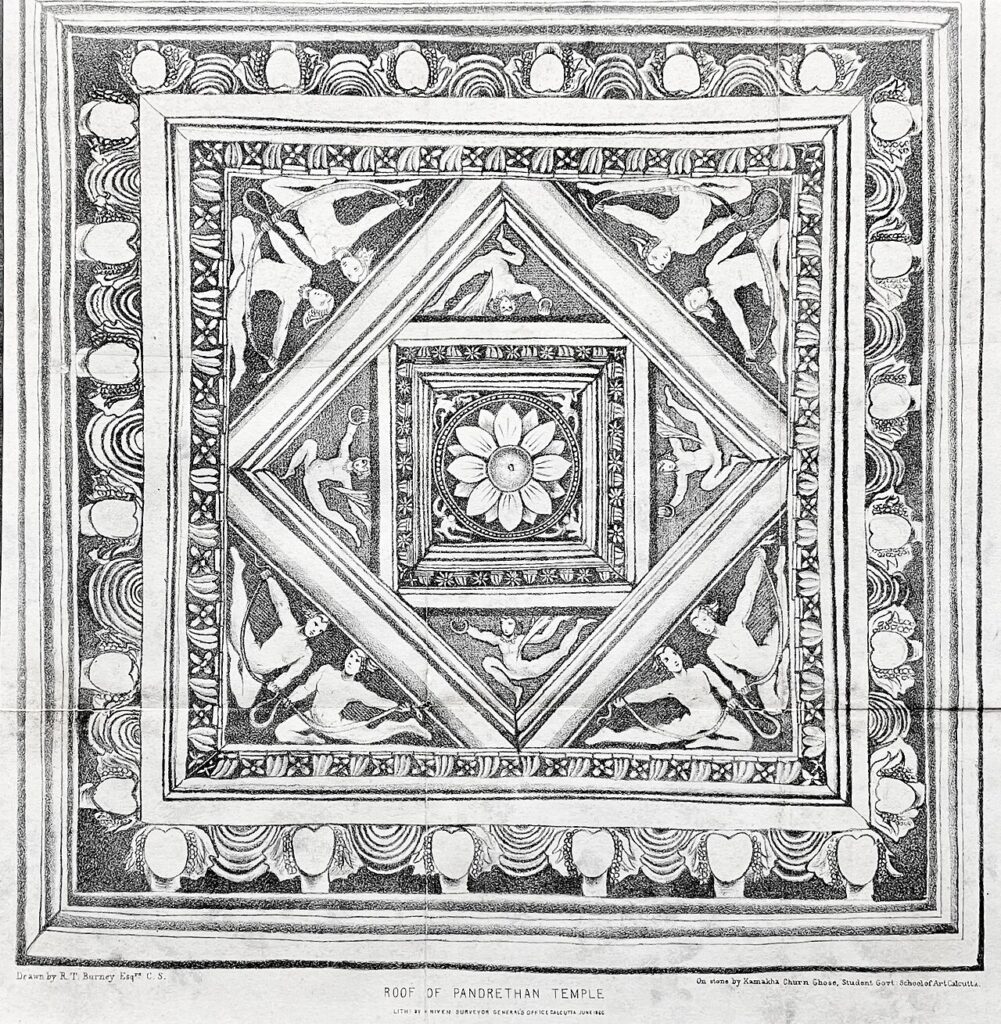
Featured photo: the temple at Pandrethan, near Srinagar, where tradition places Lal Ded’s birth, photographed about 1870 (photographer unknown), KITLV collection, Leiden University Libraries, public domain, via Wikimedia Commons. Ceiling of the Pandrethan temple, drawn by R. T. Burney, 1866, public domain, via Wikimedia Commons.

You May Also Like

Gazal by Ayaz Rasool Nazki

Abdul Ahad Zargar: Fakiri