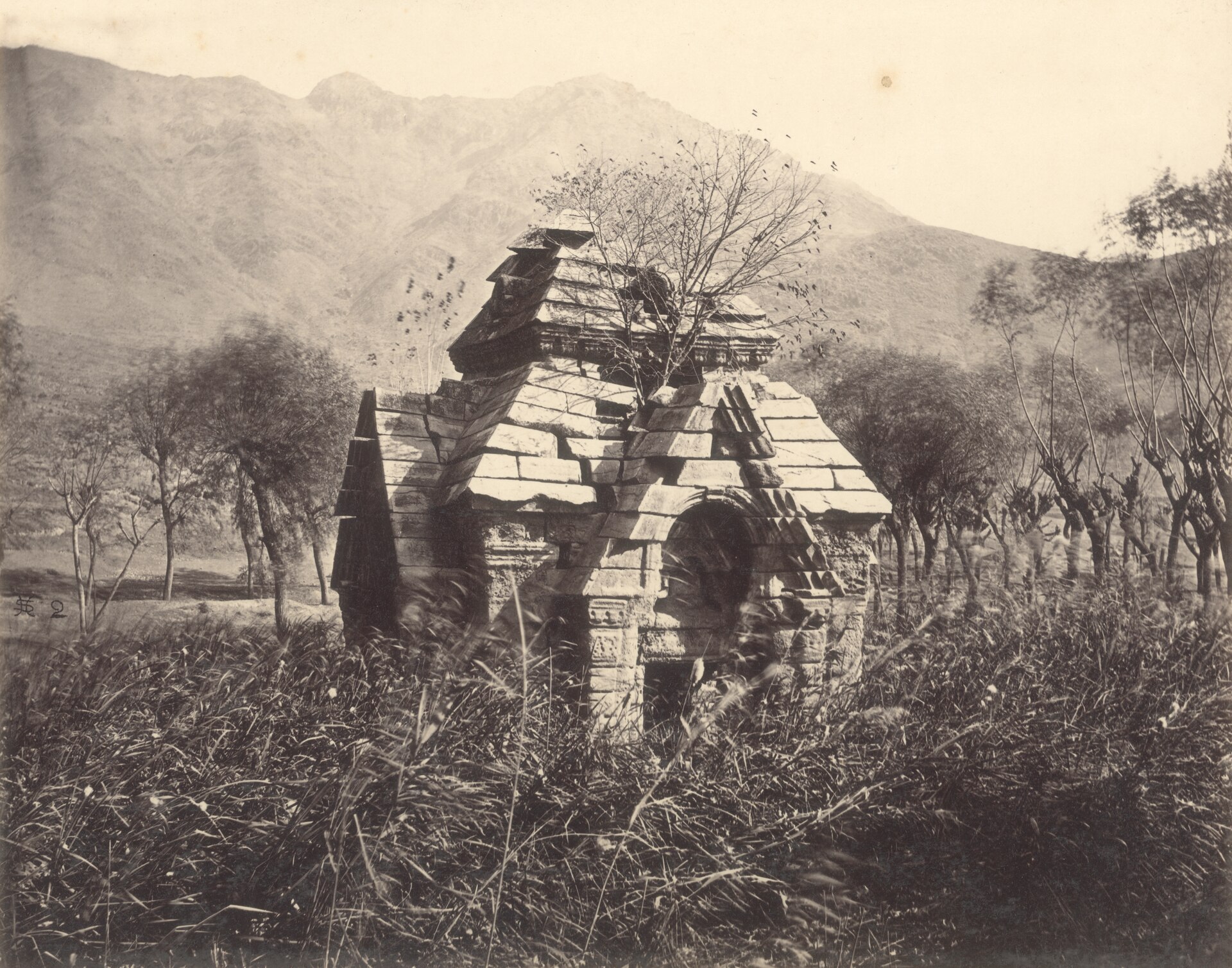
Sufism in Kashmir: Origins, Orders and Saints
For more than six hundred years, Sufism has shaped how Kashmiris pray, sing, build and remember. Its shrines still mark the skyline of Srinagar, its litanies are still recited in the valley’s mosques, and its poets are still sung at weddings and gatherings. This is a short guide to where Kashmiri Sufism came from, the orders and saints who carried it, and the traditions it left behind.
How Sufism reached Kashmir
Islam came to Kashmir largely through Sufis rather than conquest. The best-remembered early figure is Sayyid Sharaf-ud-Din, known as Bulbul Shah, a saint of the Suhrawardi order from Turkestan. In the early fourteenth century the Ladakhi prince Rinchan, who had taken the throne of Kashmir, embraced Islam at his hands and took the name Sadr-ud-Din. A hospice built for Bulbul Shah in Srinagar, remembered as Bulbul Lankar, is traditionally counted as the valley’s first.
In 1339 Shah Mir founded the Kashmir Sultanate, and under the sultans that followed, Persian-speaking scholars and Sufis travelled to the valley from Iran and Central Asia.
Shah-e-Hamadan and the Kubrawi order
The most influential of these travellers was Mir Sayyid Ali Hamadani (1314–1384), a master of the Kubrawi order from Hamadan in Iran, revered in Kashmir as Shah-e-Hamadan and Amir-e-Kabir. He visited the valley in the 1370s and 1380s with a large company of disciples, scholars and craftsmen.
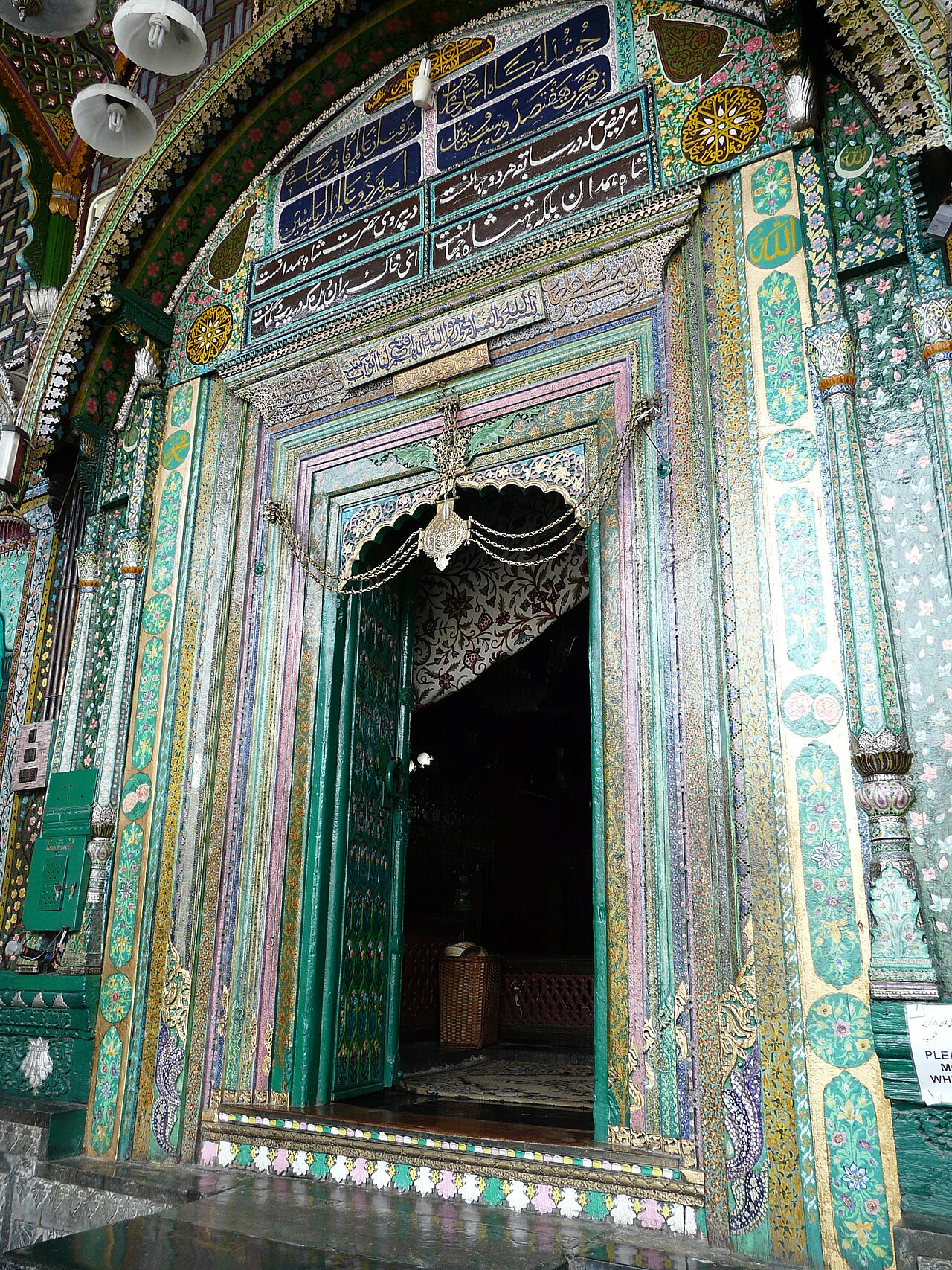
His legacy is everywhere in Kashmir. The Khanqah-e-Moula on the bank of the Jhelum in Srinagar stands where he prayed and taught; the present wooden building has been rebuilt more than once. His litany, the Awrad-e-Fathiya, is still recited aloud in many Kashmiri mosques. Kashmiri tradition also credits the craftsmen who came with him with establishing crafts such as shawl weaving and papier-mâché in the valley.
His son, Mir Muhammad Hamadani, continued the work at the court of Sultan Sikandar at the end of the fourteenth century. The Kubrawi devotional tradition lives on in Kashmiri religious poetry, including the naat and marsiya of Moulvi Assadullah Sahib Hanafi Kubravi in our collection.
Lal Ded and the Rishis: Kashmir’s own path
Kashmir also produced a mystical tradition of its own. Lal Ded (Lalleshwari), a fourteenth-century Shaiva yogini, wandered the valley reciting short verses known as vakh. She was not a Sufi, but Kashmiri Hindus and Muslims alike have claimed her as their own, and her verses shaped the spiritual language of everyone who came after her.
Among them was Sheikh Nur-ud-Din Noorani (c. 1377–1438), known as Nund Rishi and honoured as Alamdar-e-Kashmir, the standard-bearer of Kashmir. He founded the Rishi order, a distinctly Kashmiri form of Sufism. The Rishis lived simply, often as vegetarians, gave up comfort and wealth, served travellers and the poor, and planted trees. Nund Rishi taught in Kashmiri rather than Persian, in verses called shruk that ordinary villagers could remember. One of the best known is still quoted today:
Ann poshi teli, yeli wan poshi.
Sheikh Nur-ud-Din Noorani (Nund Rishi)
Food will last only as long as the forests last.
His shrine at Chrar-e-Sharif, south-west of Srinagar, remains one of the most visited places of pilgrimage in Kashmir. Rishi shrines across the valley carry on his memory.
Later orders and shrines
In the sixteenth century the Suhrawardi order was revived by Sheikh Hamza Makhdoom (1494–1576), known as Makhdoom Sahib, whose shrine rises on the slope of Hari Parbat in Srinagar. The Qadiri and Naqshbandi orders also gained followings, and shrines such as Dastgir Sahib at Khanyar, dedicated to Sheikh Abdul Qadir Jilani, became centres of devotion. The annual urs of each saint still draws large crowds.
Sufi poetry and Sufiana Kalam
Sufi ideas found their fullest expression in Kashmiri poetry. Poets such as Shams Faqir, Wahab Khar, Samad Mir and, in the twentieth century, Abdul Ahad Zargar wrote of divine love, the self and the search for truth in the language of the village. You can read Ahad Zargar’s Fakiri on Kashmir Pages.
These verses are sung in Sufiana Kalam, the classical Sufi music of Kashmir. Performed in sets of melodic modes called maqam, it is traditionally accompanied by the santoor, the sitar and the bowed saz-e-Kashmir.
A living tradition
Kashmiri Sufism is not only history. Shrines remain places where people come to pray, to ask for help and to meet one another; litanies such as the Awrad-e-Fathiya are still recited each morning; and the Rishi call for simplicity and care for the land has never sounded more timely. For a collection of prayers and remembrance from this tradition, see The Dhikr Book of Kashmir in our Library.
Further reading
- Abdul Qaiyum Rafiqi, Sufism in Kashmir from the Fourteenth to the Sixteenth Century (1972).
- Mohammad Ishaq Khan, Kashmir’s Transition to Islam: The Role of Muslim Rishis (1994).
- Mohibbul Hasan, Kashmir under the Sultans (1959).
- G. M. D. Sufi, Kashir: Being a History of Kashmir (1948–49).
- Baharistan-i-Shahi, an anonymous Persian chronicle of medieval Kashmir, translated by K. N. Pandit as A Chronicle of Medieval Kashmir.
Featured photo: Hazratbal Shrine, Srinagar, by Hardikmodi, Wikimedia Commons, licensed CC BY-SA 3.0.
You May Also Like