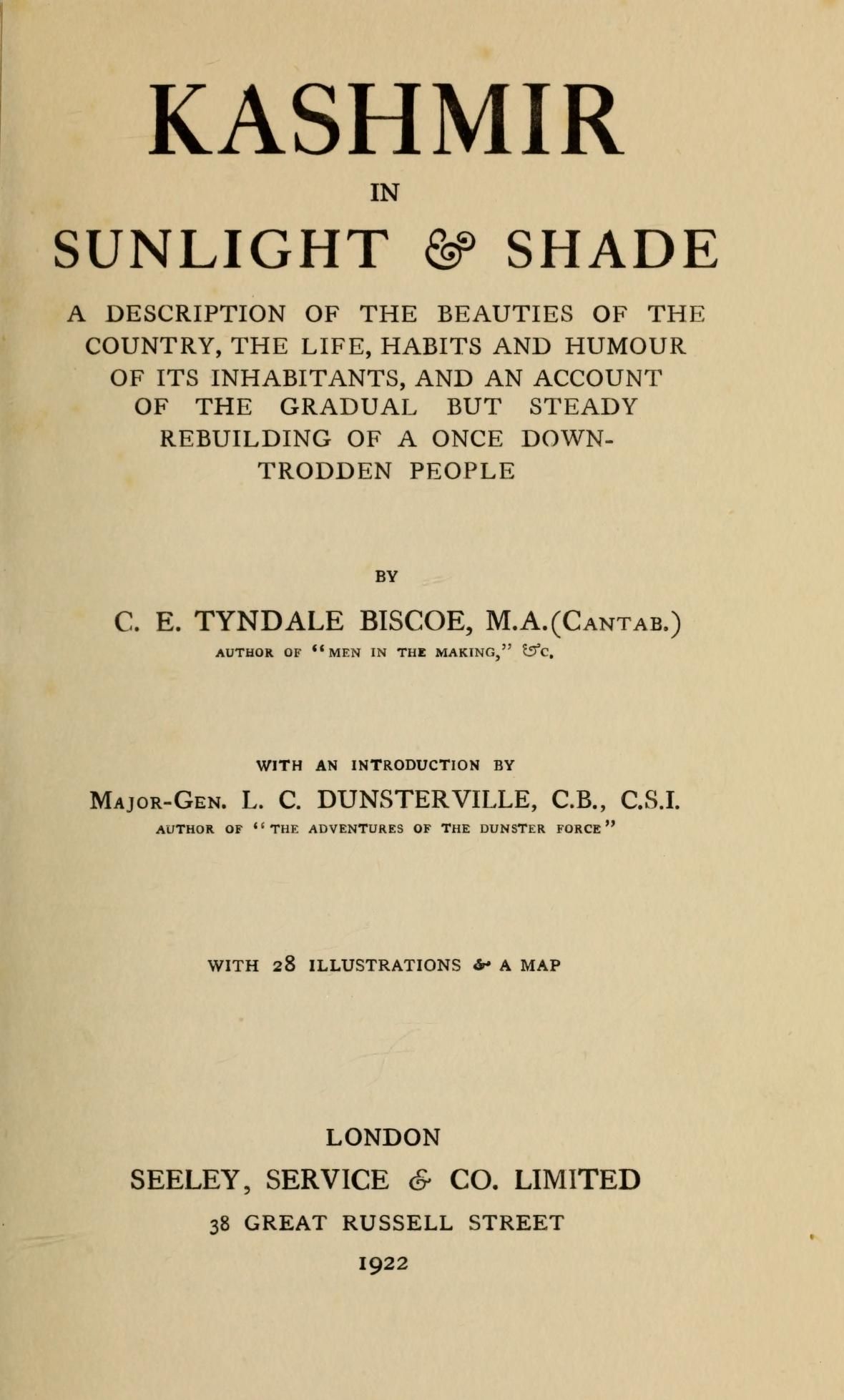
The Valley of Kashmir by Walter R. Lawrence
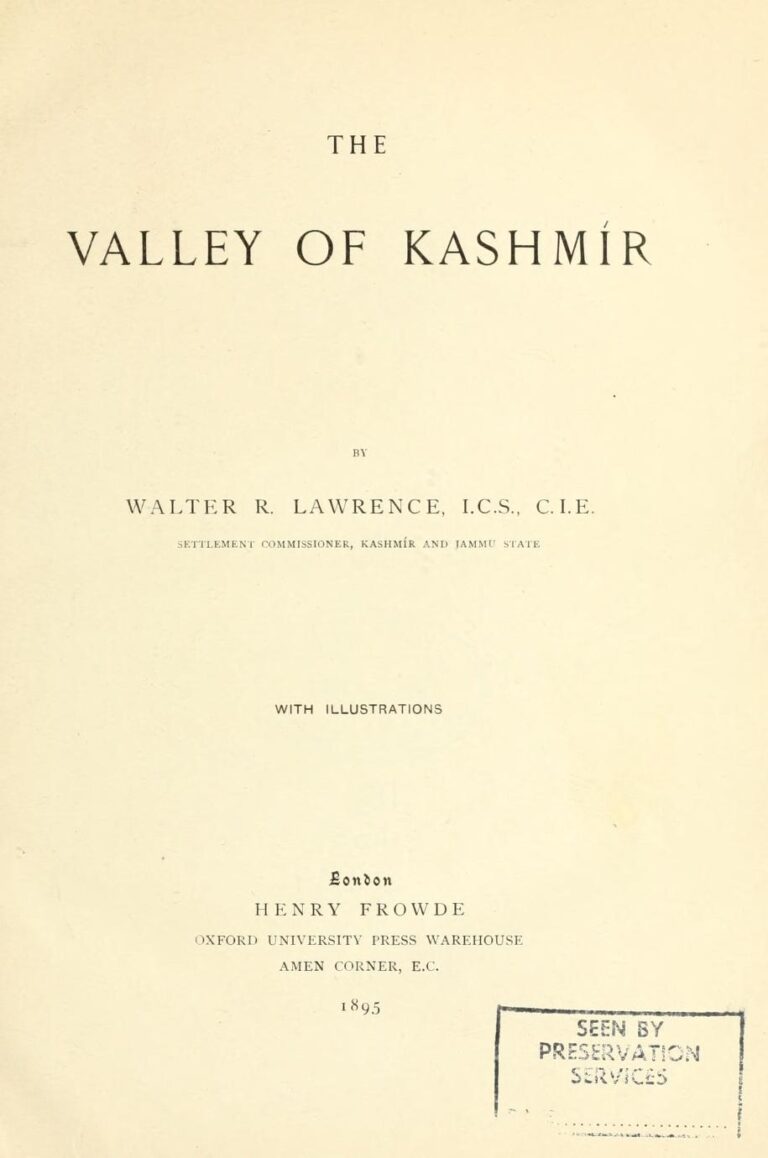
Lawrence was sent to sort out the land tax and ended up writing the best book on the valley we have. Floods and fruit trees, shawl weavers and shrines, grumbles and proverbs; he wrote down whatever the villagers told him.
If the book does not appear here (some phones can’t show PDFs inside a page), use Open full screen or Download PDF.
About this book
One old book on Kashmir? This one. Lawrence arrived from the Punjab in 1889 with about the dullest job title imaginable, Settlement Commissioner, which meant fixing what each village owed in land revenue. In practice that meant six years in the saddle, village after village, sitting with cultivators and headmen and patwaris and asking endless questions. What came out of it, in 1895, is something between a gazetteer and a love letter.
The range is staggering. He starts with the rocks, the rivers and the floods (the Jhelum’s bad habits get a chapter of their own), moves on to birds, trees and wild flowers, then the history from the Hindu kings to the Dogras. After that, people, and here he really gets going: how rice is grown, how sheep are counted on the “threshing-floor of sheep”, what a shawl weaver earned, why boatmen shout “Ya Pir Dastgir” going upstream. There’s a chapter on saints, one on what Kashmiris eat and wear and fear, and a Kashmiri glossary tucked in at the end. He was not neutral. He thought the Kashmiri peasant had been squeezed for centuries and he says so plainly, often angrily.
Some of his remarks about Kashmiris read badly now; he was a Victorian official and sometimes sounds like one. But he also listened, and he credits the people who taught him, among them Pir Hassan Shah, “a learned Kashmiri, whose work lies entirely among the villagers”. A lot of our own articles lean on him: on shawls, woodwork, silk and the shrines.
Where to start? Chapter XI on religion if you like saints and shrines. Chapter XV on industries if crafts are your thing. Or just open it anywhere. It’s that kind of book.
You May Also Like

The Kashf al-Mahjub of Ali al-Hujwiri (Data Ganj Bakhsh), translated by R. A. Nicholson

Marsiyaat e Hasnain: Naat wa Manaqib by Moulvi Assadullah Sahib Hanafi Kubravi